What to Include in Your Recipe Membership Site
A great membership site doesn’t require daily content drops, complicated community tech, or turning yourself into a full-time course creator.
The best food memberships are surprisingly simple. They focus on removing friction, adding convenience, and making loyal readers feel like insiders.
Let’s break down what to offer in a membership site, using real examples, proven UI patterns, and launch strategies that work for recipe creators right now.
1. Members-only recipes (but be strategic about it)
Exclusive recipes are table stakes, but the key is how you position them.
Instead of “extra recipes,” think:
Tested, repeat-worthy favorites
Seasonal collections (holiday, weeknight, meal prep)
Recipes that solve a specific problem (30-minute dinners, high-protein breakfasts, gluten-free baking that actually works)
You don’t need dozens upfront. Many successful memberships launch with as few as 5-10 exclusive recipes and add more monthly.
What matters more is visibility.
A gated content block on your homepage (showing blurred or locked recipe cards) does wonders for passive conversion. It lets readers see what they’re missing without interrupting their flow.
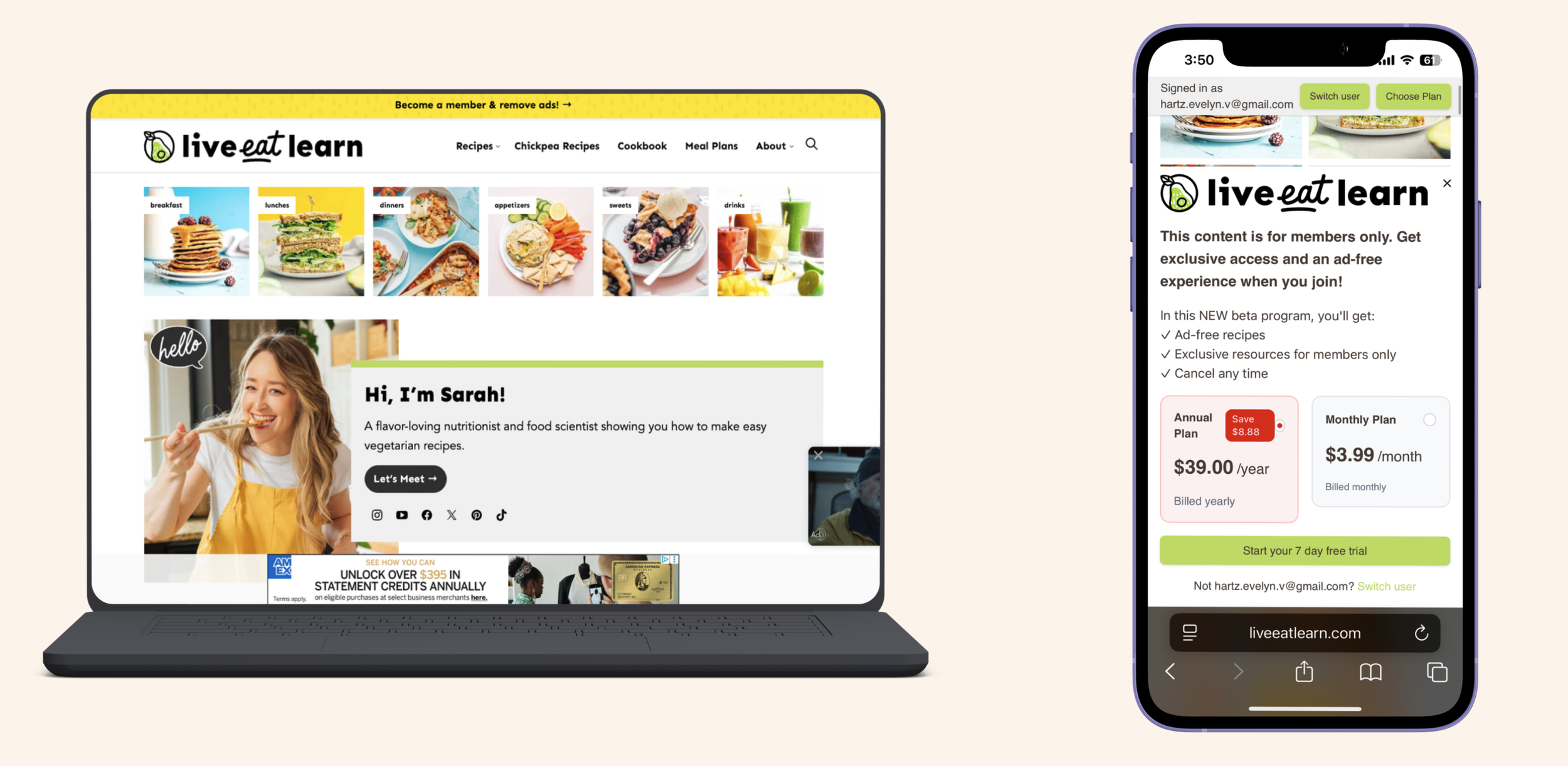
2. An ad-free browsing experience
This one consistently overperforms.
Readers may tolerate ads, but they don’t love them, especially when they’re mid-recipe with messy hands and a jumping screen.
Offering automatic ad removal for members turns your membership into a quality-of-life upgrade, not just “more content.”
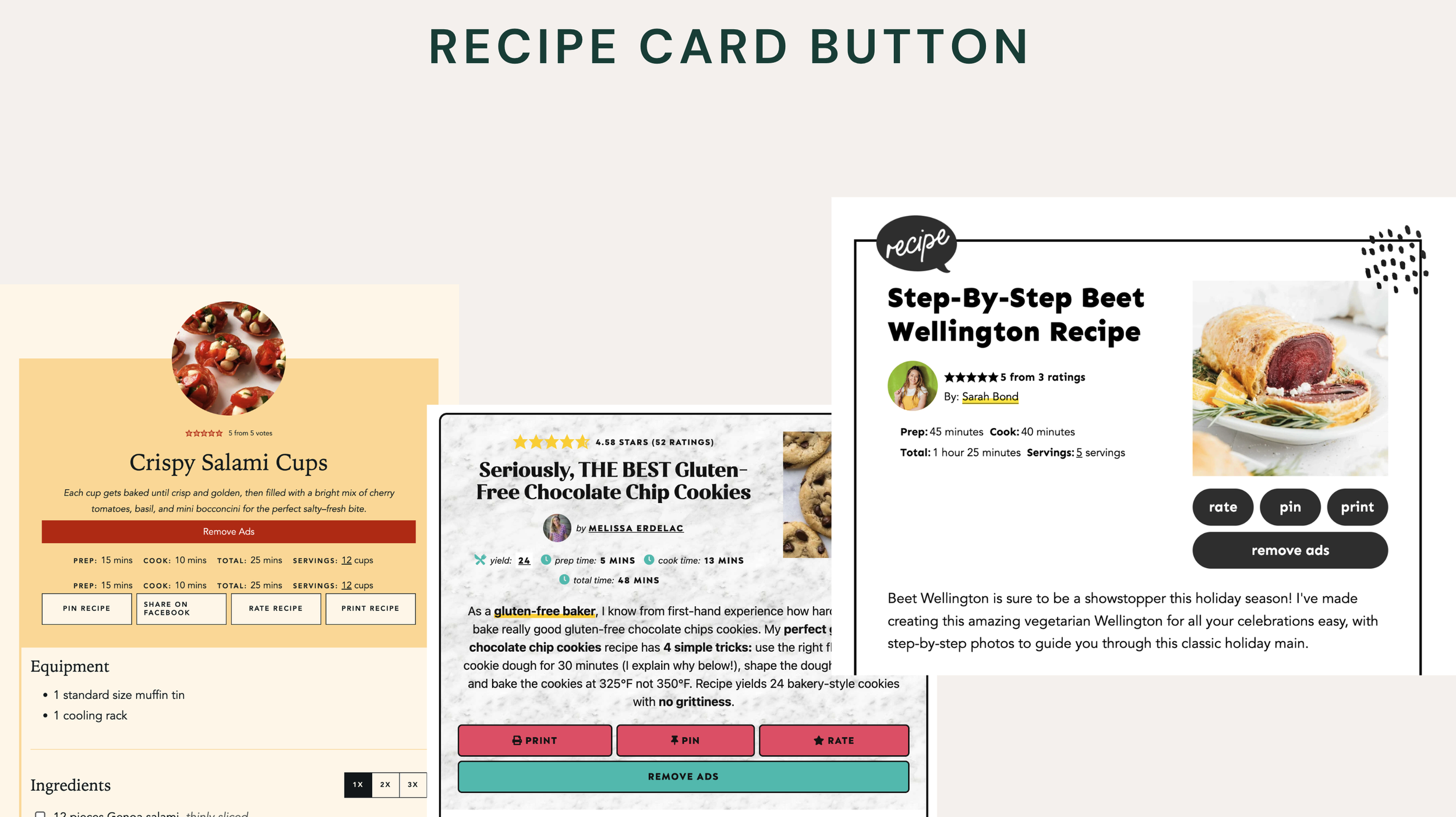
A simple “Remove Ads” button on your recipe card works because it appears at the exact moment of frustration. That’s when people convert.
This kind of ad-free gating is a cornerstone of modern food memberships and is supported natively in platforms like Grocers List when you activate paid memberships!
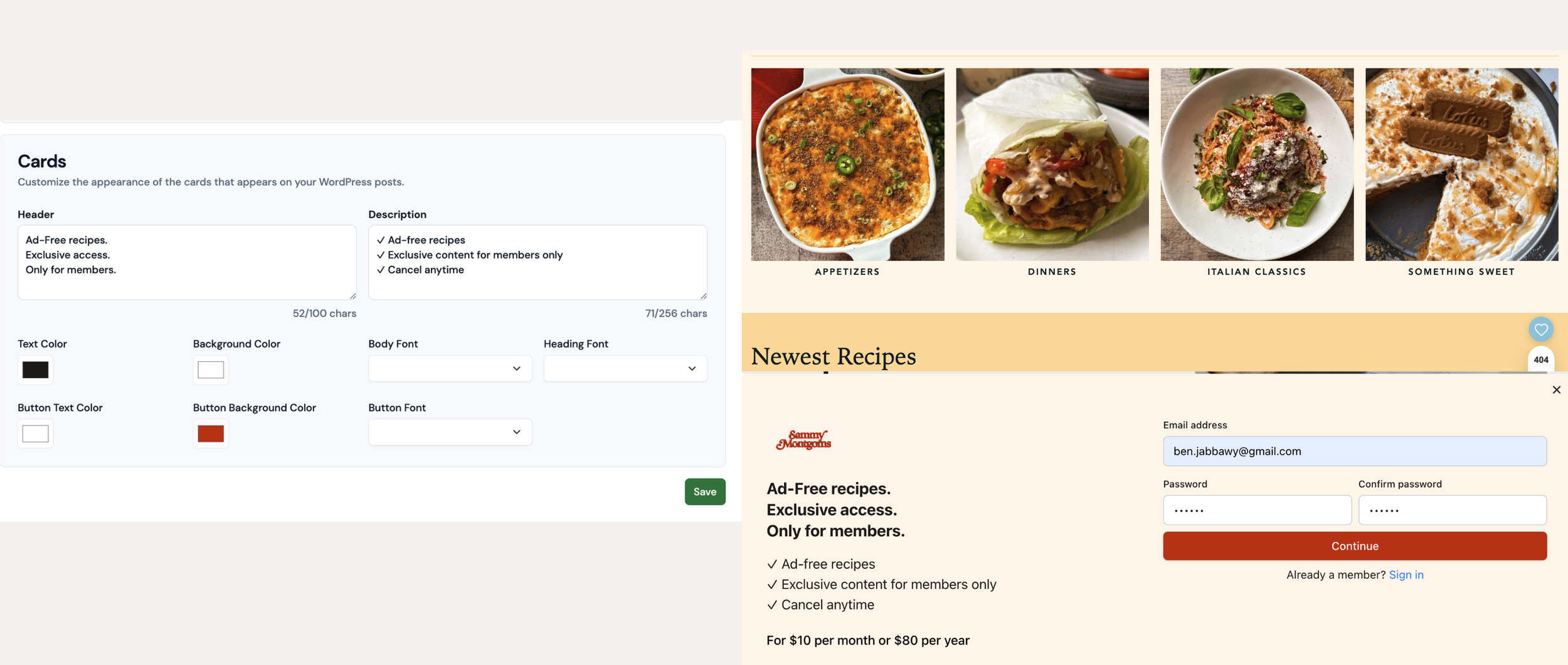
You can activate this easily within Grocers List
3. A dedicated membership sales page
If you want passive signups, you need a single place that explains:
What members get
Who it’s for
How much it costs
How easy it is to cancel
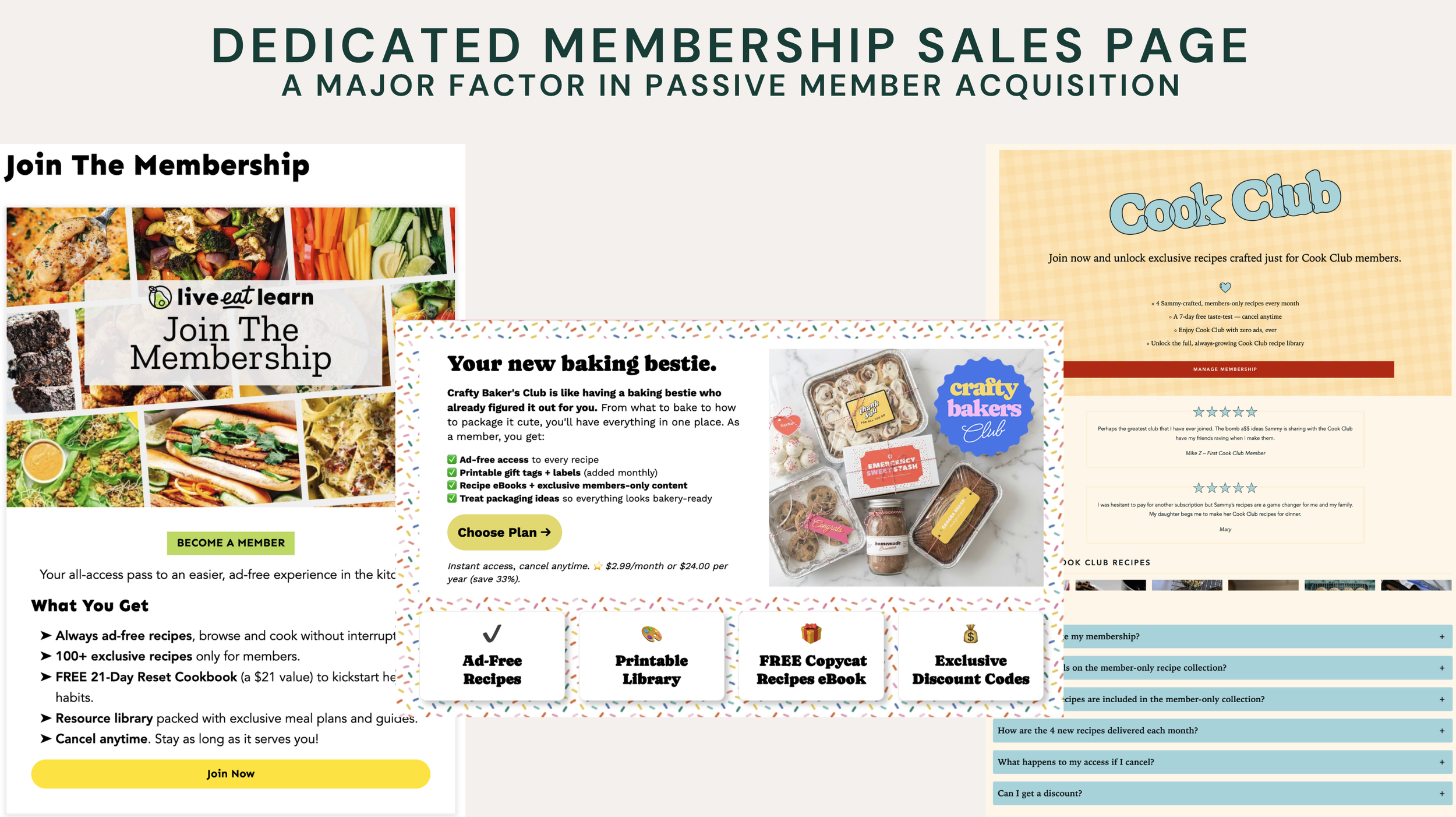
Live Eat Learn accomplishes this simply with Grocers List.
Your membership page doesn’t need to be long, it just needs to be clear. Strong pages usually include:
A simple headline (“Cook Club: Ad-Free Recipes + Exclusive Dinners”)
A visual preview of member recipes
3–5 bullet benefits
Social proof or testimonials
Clear pricing (monthly + annual)
This page should be linked in your main navigation and reused everywhere: DMs, emails, story replies, and recipe CTAs.
4. Smart entry points
The best memberships don’t rely on one big launch moment. They convert quietly, every day. High-performing creators use multiple lightweight entry points:
a. Recipe card buttons
A subtle “Go Ad-Free” or “Join the Cook Club” button inside the recipe card converts readers who are already cooking.
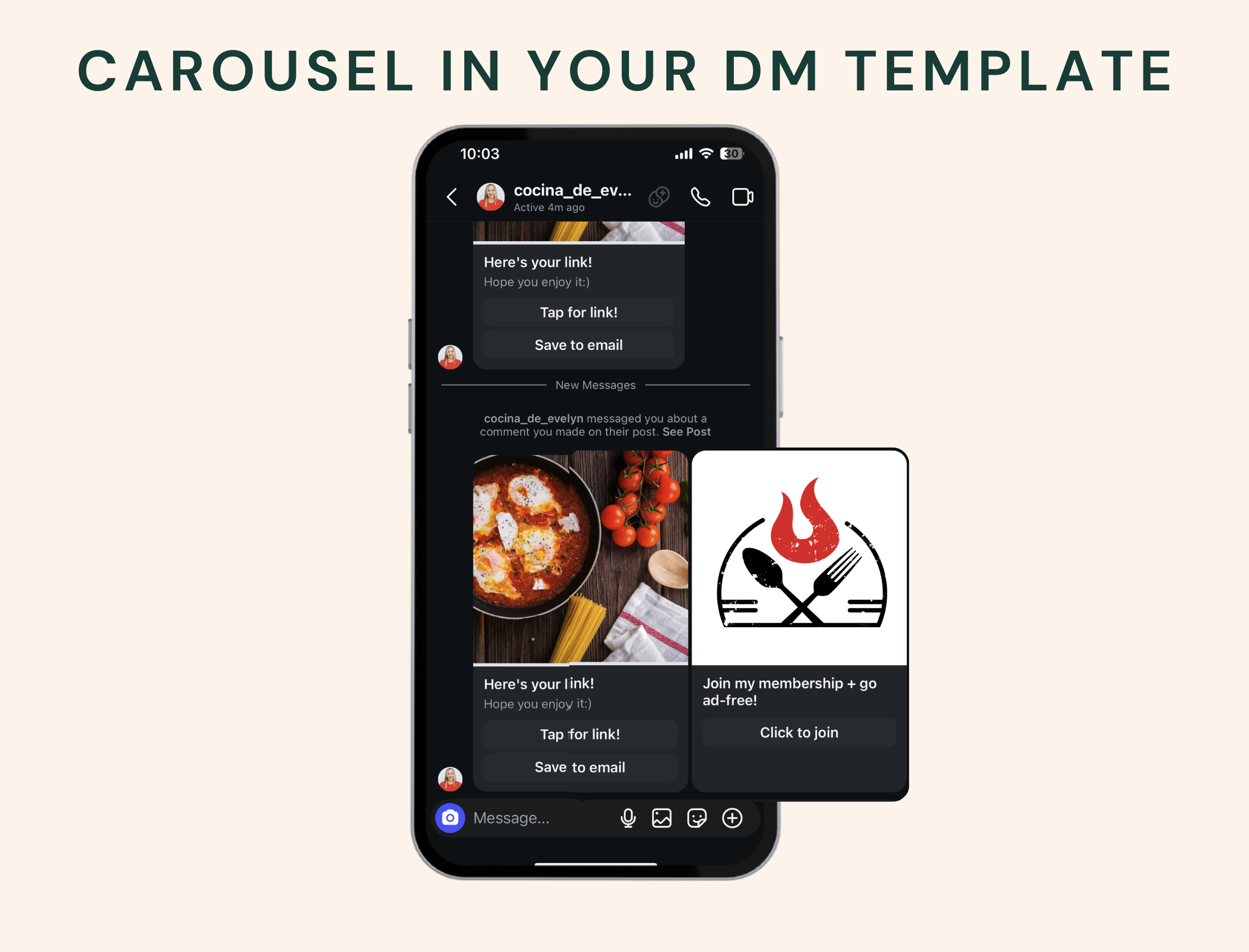
b. DMs with a carousel CTA
If you’re already sending recipe links via DM, adding a membership card to that flow is incredibly effective.
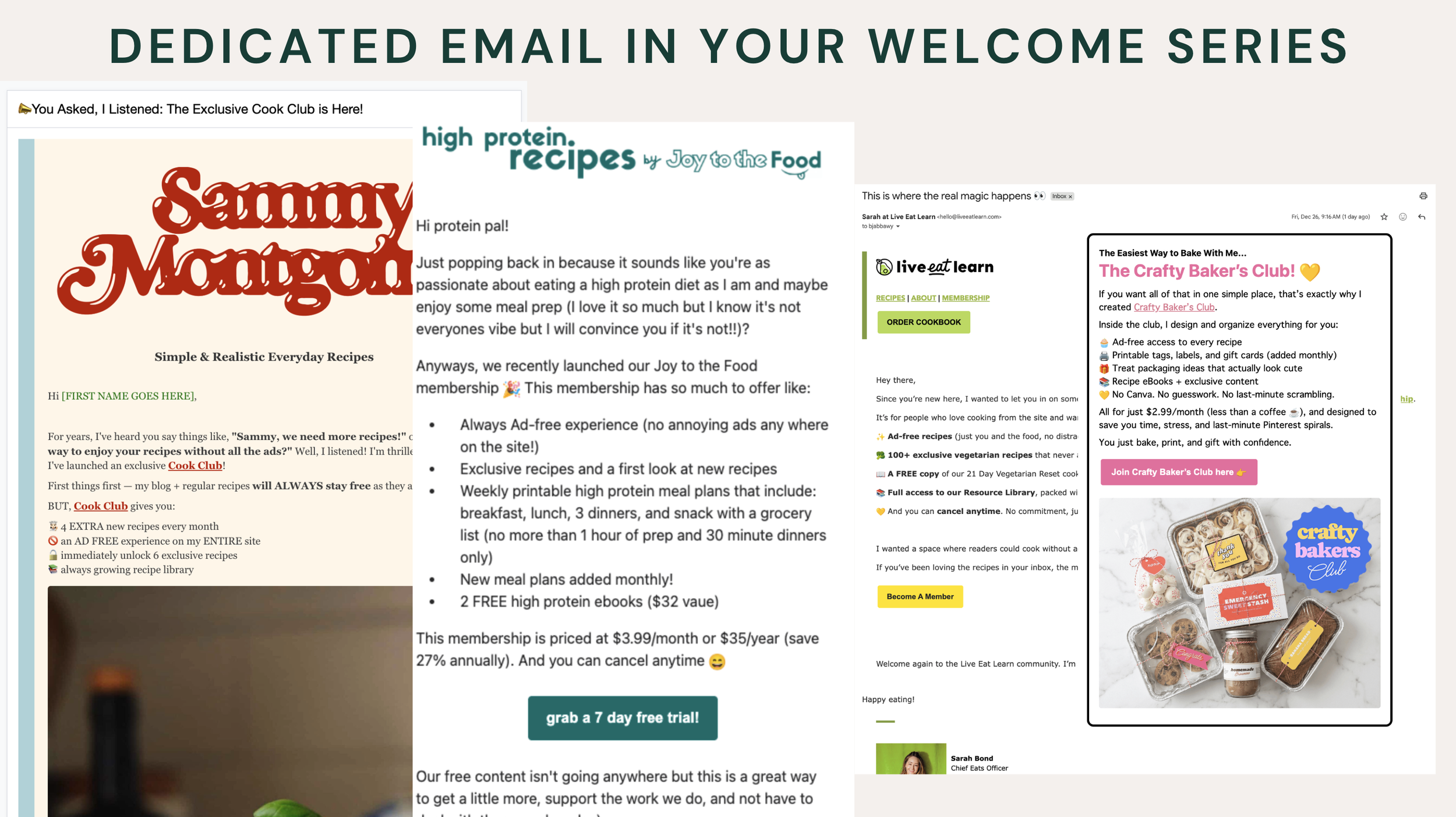
c. Welcome series email flow
New subscribers are at their highest intent. Adding one dedicated membership email to your welcome flow consistently outperforms one-off promo blasts.
5. Abandoned cart emails
If someone starts your membership signup and doesn’t finish, they’re not saying “no”, they’re saying “not now.”
A short, personal abandoned cart email often brings them back.
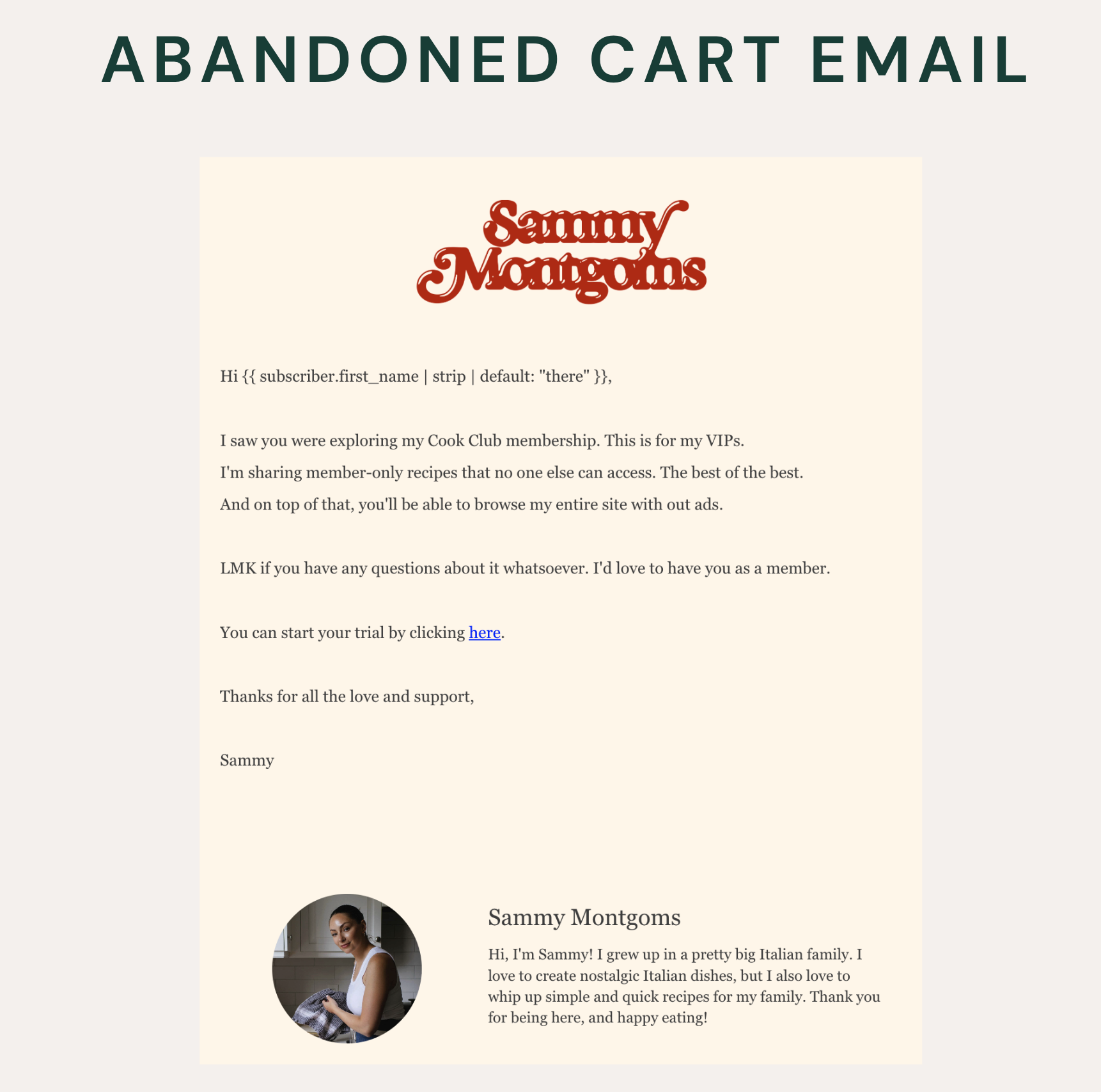
Clever example from Sammy Montgoms and her Cook Club.
The best versions:
Sound like you
Reiterate the top 2 benefits
Invite questions
Keep the tone warm, not urgent
This setup is supported when you connect your membership to email tools like Kit or Flodesk.
6. Don’t overcommit on “community”
Private communities can be powerful, but they’re also the fastest way to burn yourself out.
If you include community, keep it lightweight:
Occasional live Q&A
Seasonal check-ins
Comment access on member-only posts
You can always add a Facebook group or Discord later. Your first goal is retention, not constant interaction.
7. Pricing, trials, and scope
Most successful food memberships land between:
$3–5/month, or
$30–50/year with an annual discount
Trials can work, especially if your value is experiential (ad-free + convenience). Just make sure the onboarding clearly shows what members unlock.
And most importantly: Start small.
You do not need:
Weekly live classes
Dozens of exclusives
Daily community prompts
You need a clear promise and consistent delivery.
You don’t have to build this alone!
The best membership sites don’t start with a massive content calendar or a big, dramatic launch. They start by serving the people who are already there, the readers saving your recipes, cooking from your site, and coming back week after week.
When you focus on:
removing friction (fewer ads, faster access),
offering a handful of truly valuable exclusives,
and placing simple, well-timed invitations to join,
Your membership becomes a natural extension of your recipe business, not an extra job layered on top of it.
And if you’re still in the “is this even worth it for my audience?” phase, you don’t have to guess.
Trying Grocers List (or chatting with one of our experts) can help you see how a membership might fit into your existing setup, from ad-free recipes to gated content, email flows, and DMs that quietly convert readers into members. Even a short conversation can clarify what’s realistic for your site, your bandwidth, and your audience.
Because the goal isn’t to copy someone else’s membership site, it’s to build one that actually works for the way you cook, publish, and connect with your readers.